
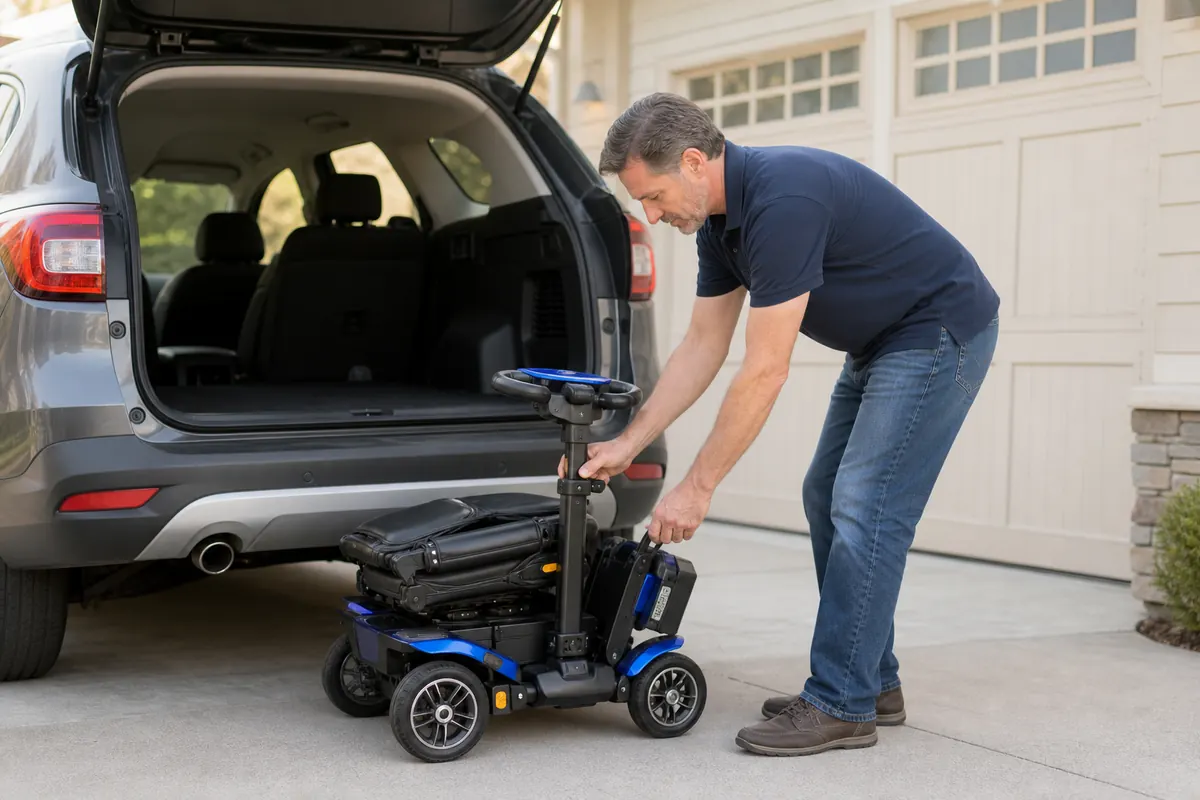
Quick answer: Apartment use adds elevator, hallway, storage, charging, and building-policy questions to the product decision. The most useful next step is to compare the real routine with current, model-specific documentation instead of relying on a generic label or a single specification.
Start with the real situation
Confirm the building route, designated storage, charging rules, and emergency egress before selecting a model. Write down the route, the people involved, the equipment already in use, and the exact question that needs an answer. This keeps the decision grounded in how the scooter will be used rather than in a feature list that may not apply.
Use current, model-specific information
Published specifications can vary by battery option, accessories, market, and model year. Check the manufacturer manual and current product sheet for the exact scooter under consideration. Our Mobility Scooter Specifications Database is a source-linked starting point for comparing published data, but it does not replace the controlling documentation for an individual product.
A practical decision sequence
- Define the daily route and the non-negotiable fit or transport requirement.
- Compare current specifications for the exact configuration, not a generic family name.
- Test or verify the relevant routine where possible and permitted.
- Keep product documents, service contacts, and any operator requirements together.
Questions worth asking
- Does this match the user, route, storage, and transport plan?
- Which specification is confirmed by the current manufacturer source?
- What would make this plan unsafe, impractical, or too expensive to maintain?
- Who can provide model-specific support if the answer is unclear?
Common mistakes to avoid
Do not assume a scooter can be charged or stored in a shared corridor. Treat unfamiliar behavior, damage, or a conflict with the manual as a reason to pause and get qualified, model-specific help.
Continue the research
See our Scooter Types hub for related guides. This article is educational and is not personal medical, legal, engineering, or safety advice. Recheck documentation before a purchase, trip, repair, or accessibility decision.

Questions and reader comments